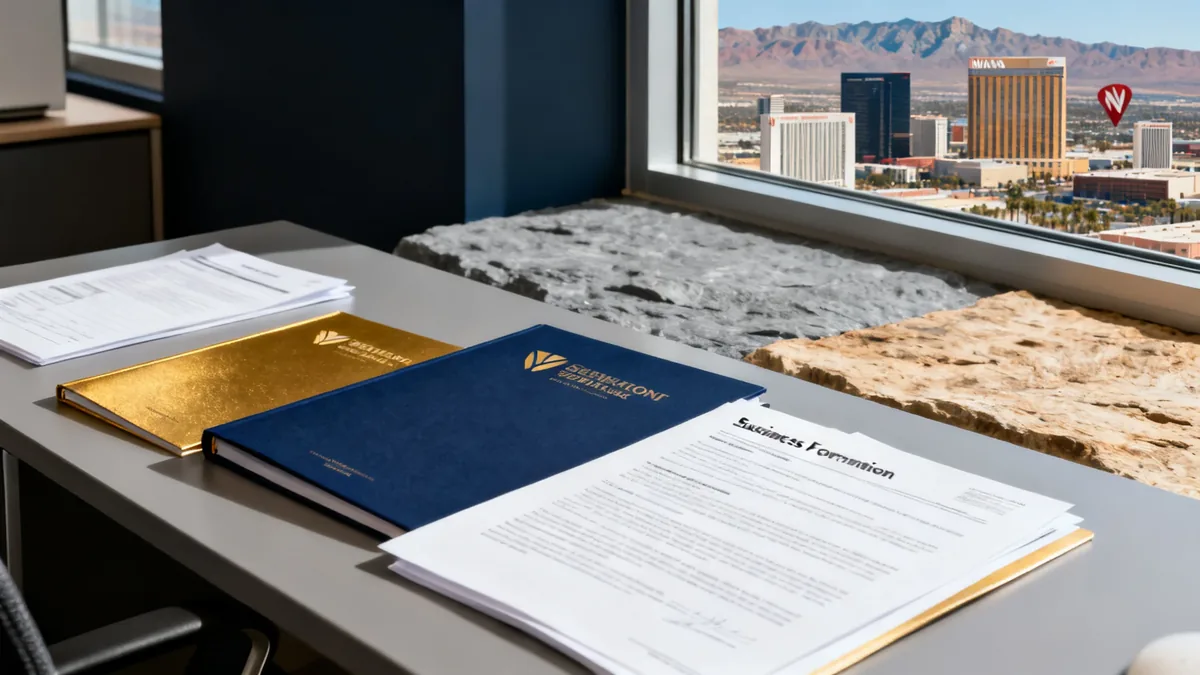
How to Get a Nevada Contractor License (NSCB Guide)
How to Get a Nevada Contractor License: NSCB Guide
Starting a contracting business in Nevada requires a license from the Nevada State Contractors Board. Whether you're planning to bid on residential projects, commercial work, or specialty trades, the licensing process involves specific steps, exams, and financial commitments. This guide walks you through what you need, how to qualify, and what to expect along the way.
What You Need Before You Apply
Before submitting an application to the Nevada State Contractors Board, gather these materials:
- Proof of work experience. Documentation of 4 to 6 years of work in the trade you're licensing for (the exact requirement depends on your license classification). This may include pay stubs, tax returns, W-2s, employment letters from former employers, or other evidence of active work in the field.
- Valid government-issued ID. Driver's license, passport, or other official identification.
- Social Security number. For background screening and tax purposes.
- Proof of residency or Nevada business address. A utility bill, lease, or other document showing your Nevada address (or the business address where you will be licensed).
- Contractor's license bond. Most license types require a bond from a surety company. You will need to contact a surety directly to arrange this before or immediately after approval of your application. Confirm the bond amount required for your specific license type with the NSCB.
- Liability insurance. Many contractors carry commercial general liability insurance. While not always a pre-licensing requirement, check with the NSCB for your specific classification.
- Application fee and exam fee. Budget for both the application processing fee and the licensing exam fee. Exact amounts vary by license classification and should be confirmed on the NSCB website.
- Sponsorship or partnership documentation (if applicable). If you are applying as a corporation or partnership, you may need articles of incorporation, a registered agent confirmation, or other business formation documents.
Understanding Nevada License Classifications
Nevada offers several contractor license types. The most common include:
- General Contractor. Qualifies you to bid on and manage projects across multiple trades. Typically requires the most experience and has the highest exam difficulty.
- Specialty Trade License. Covers a single trade such as plumbing, electrical, HVAC, framing, painting, or excavation. Each specialty has its own exam and experience requirements.
- Home Improvement Contractor. Focuses on residential remodeling and repair work (under certain project values and scopes).
- Underground Utility and Infrastructure License. For work involving trenching, boring, or utility installation.
Identify which classification matches your work before proceeding. You can hold multiple licenses if you work across different trades, but each requires a separate application and exam.
Step 1: Verify Your Experience and Qualifications
Nevada's NSCB typically requires 4 to 6 years of verifiable, full-time work experience in your trade. The exact duration depends on whether you have a related degree or apprenticeship. Gather evidence of every job you have held:
- Employment offer letters and termination letters from employers.
- Pay stubs or W-2 forms from the full period of employment.
- Tax returns showing self-employment income (if you worked independently).
- Letters from supervisors or clients confirming the scope and duration of your work.
- Project photos or references (optional but helpful).
Document any gaps in employment and be prepared to explain them. If you have a trade apprenticeship, journeyman card, or relevant technical certification, these can support your application and may reduce the required years of experience. Confirm current requirements with the NSCB, as these rules are subject to change.
Step 2: Complete the NSCB Application
Visit the Nevada State Contractors Board website to download the application for your license type. The application will ask for:
- Your full name, address, and contact information.
- The license classification you are seeking.
- A chronological work history with dates, employers, and job titles.
- Your experience summary and any relevant certifications.
- Business structure (sole proprietor, LLC, corporation, partnership, etc.).
- If your business is registered with Nevada (as an LLC or corporation), the NSCB may require your Secretary of State entity number.
Accuracy matters. Errors or omissions can delay your application or result in rejection. Review the application multiple times before submitting. If you are applying as a business entity rather than as an individual, prepare corporate documentation as well.
Step 3: Arrange Your Contractor's Bond
Nevada law requires most contractors to carry a contractor's license bond (sometimes called a contractor's license and operations bond). This is a surety bond issued by a bonding company on your behalf, guaranteeing that you will comply with Nevada law and contractor regulations.
- Find a surety company. Search online for "contractor bonding Nevada" or ask other contractors in your field for referrals. Many insurance agencies offer bonding services.
- Request a quote. Bond costs typically range from several hundred to several thousand dollars annually, depending on your license type and the bonding company's assessment of your financial standing and experience. Confirm the exact premium with the surety.
- Provide financial information. The surety will review your credit, business history, and financial statements to assess risk. Be ready to share your personal or business tax returns.
- Get the bond certificate. Once approved, the surety issues a bond certificate. Provide this certificate to the NSCB as part of your application or licensing process.
Bond requirements vary by classification. Some specialty trades may require smaller bonds than general contractor licenses. Confirm the exact bond amount required for your license type before purchasing.
Step 4: Apply and Pay the Application Fee
Submit your completed application to the NSCB along with the application fee. Pay the fee through the method specified by the NSCB (check, online payment, money order, etc.). Keep proof of payment and your application receipt for your records. Processing times vary. The NSCB does not publish a guaranteed turnaround, but applications typically are reviewed within several weeks. You will receive notice if additional information is needed.
Step 5: Pass the Contractor Exam
Once your application is accepted, you will be eligible to take the licensing exam for your classification. This is a required step.
- Schedule your exam. The NSCB administers exams through a testing vendor. You will schedule your exam date and time through the NSCB website or by contacting them directly. Confirm the current exam schedule and registration process.
- Pay the exam fee. A separate exam fee applies. Confirm the amount when you schedule.
- Study the Nevada Contractors Board law and regulations. Review NRS Chapter 624 (Nevada Revised Statutes on contractors), the Nevada Administrative Code (NAC) Chapter 624, and the NSCB's study materials. Many online prep courses are available for Nevada contractor exams; some are free, and others charge a fee. Study carefully, as the exam is a significant hurdle.
- Take the exam. Exams are typically multiple-choice, computer-based or paper-based depending on the testing location. You may be asked about general construction law, bid practices, safety, Nevada-specific regulations, and technical knowledge specific to your trade. Most exam locations allow 2 to 4 hours to complete the test.
- Pass with a minimum score. Passing scores typically range from 70 to 80 percent, depending on the exam. Confirm the passing score for your classification.
- Retest if needed. If you do not pass on your first attempt, you can retake the exam. Retesting rules and fees should be available on the NSCB website.
Step 6: Receive Your License and Register with the State
After passing the exam, the NSCB will issue your contractor's license. You will receive a physical license card or certificate and a license number. At this point, you are legally authorized to perform contracting work in Nevada under that license classification.
If your business is structured as an LLC or corporation, verify that your business entity is registered with the Nevada Secretary of State. The NSCB may cross-reference this registration during the licensing process.
Tips and Common Mistakes to Avoid
- Do not inflate or falsify your experience. The NSCB verifies work history with employers and references. Dishonesty can result in permanent denial of your license and legal consequences.
- Plan ahead for the exam. The contractor exam is challenging. Allow at least 4 to 8 weeks to study after your application is accepted. Many candidates fail on the first attempt because they underestimated the breadth of material.
- Arrange bonding early. Surety companies can take 1 to 3 weeks to issue a bond certificate. Do not wait until the last minute to purchase bonding.
- Confirm current fees and requirements. Licensing fees, exam fees, bonding requirements, and experience minimums change periodically. Always check the official NSCB website before applying.
- Keep your license current. Nevada contractor licenses must be renewed annually or every two years, depending on your classification. Failure to renew results in suspension or expiration. Mark renewal deadlines in your calendar and submit renewal applications on time.
- Understand continuing education obligations. Most Nevada contractor licenses require continuing education hours each renewal period. Verify what is required for your classification and plan to complete it before your renewal date.
- Maintain your bond and insurance. Bonding and insurance lapses can result in license suspension. Arrange auto-renewal with your surety and insurance carriers if possible.
Expected Results and Timeline
The entire process, from application submission to receiving your license, typically takes 8 to 16 weeks, though this varies based on application completeness, exam scheduling, and how quickly you pass the exam. If your application requires additional information or if you do not pass the exam on your first attempt, timelines extend accordingly.
Once you receive your license, you can immediately begin bidding on and performing contracting work within your classification. You may need to register with local city or county authorities as well, depending on where you operate. Some jurisdictions require local contractor registration or permits even if you hold a state license.
Important Disclaimer
This article is informational and not legal or tax advice. Nevada contractor licensing requirements, fees, and regulations change periodically. Before applying, verify all current requirements, fees, and deadlines directly with the Nevada State Contractors Board at their official website or by contacting them. Consult a Nevada-licensed attorney or tax professional if you have questions about business structure, liability, taxes, or other legal matters related to your contracting business. Your success in obtaining and maintaining a contractor's license depends on meeting all Nevada State Contractors Board requirements as they exist at the time of your application.
Keep exploring: related Nevada guides
- Nevada Home-Based Business Laws
- How to Get a Resale Certificate in Nevada
- Nevada Food Truck Permits and Licenses by Jurisdiction
- How to Get an EIN in Nevada
- How to Start a General Contractor Business in Nevada
- How to Start an Electrician Business in Nevada
- How to Start a Plumbing Business in Nevada
- How to Start an HVAC Business in Nevada
- Every Nevada guide in one place